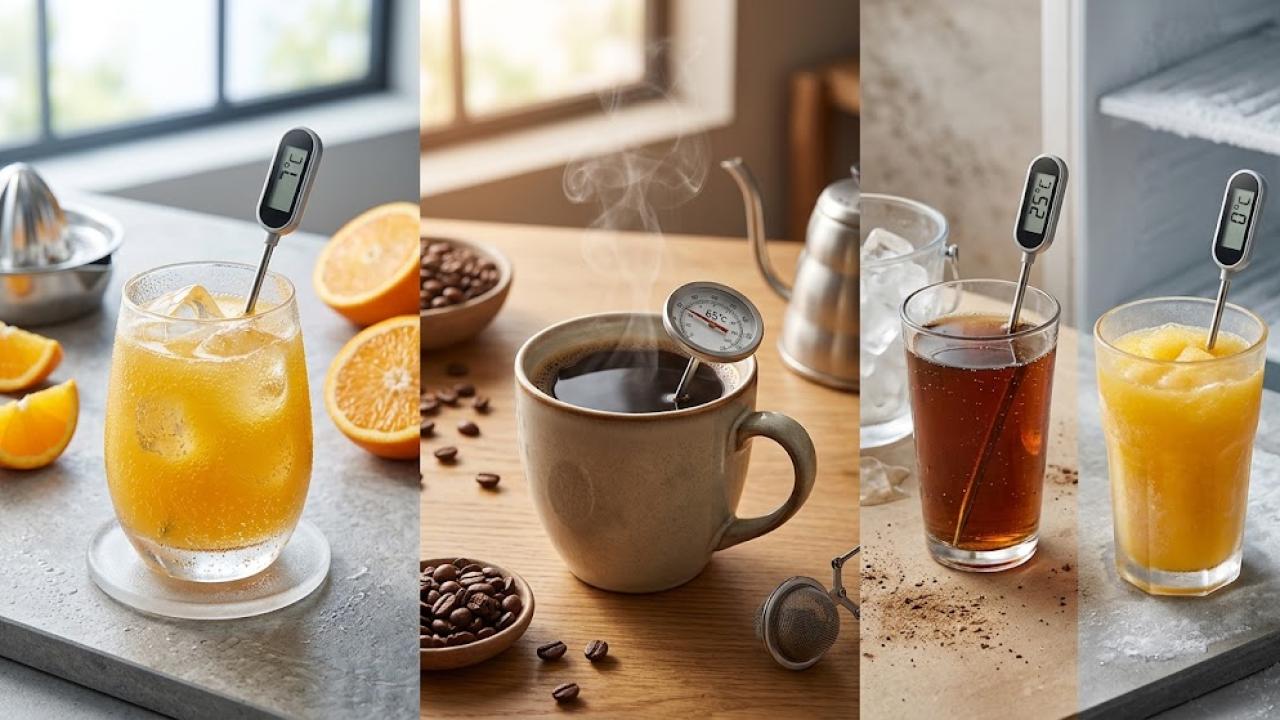
Serving temperature plays a vital role in the overall drinking experience and can significantly influence the aroma and flavor of nectars and other beverages. This effect is due to changes in the activity of volatile molecules, the sensitivity of taste buds, and the solubility of various compounds at different temperatures.
Why Is the Ideal Temperature Different for Each Beverage?
The ideal temperature varies from one beverage to another because each drink has a unique chemical composition of sugars, acids, alcohols, and aromatic compounds that behave differently at different temperatures. For example, beverages with high acidity may be more pleasant when served colder, whereas more complex beverages require a temperature that allows all of their flavor layers to fully unfold.
How Does Cold Temperature Affect the Aroma and Flavor of Beverages?
Cold temperatures generally reduce the activity of volatile molecules, resulting in a less pronounced aroma. In terms of taste, lower temperatures can diminish perceived sweetness while making bitterness or acidity more noticeable. This occurs because our taste receptors become less sensitive to certain flavors, such as sweetness, at lower temperatures.
- Reduced aroma: Molecules responsible for a beverage's pleasant scent evaporate less readily.
- Changes in flavor perception: Sweetness may be less noticeable, while sourness or bitterness may become more pronounced.
- Reduced solubility: Certain aromatic compounds dissolve less effectively in the beverage.
Can Warm Temperatures Change the Aroma and Flavor of Beverages?
Yes, warm temperatures can also alter the aroma and flavor of beverages in various ways. Higher temperatures increase the evaporation of volatile compounds, thereby intensifying aroma. However, excessively high temperatures may lead to the degradation of delicate aromatic compounds and release undesirable flavors, such as excessive bitterness.
- Enhanced aroma: Aromatic molecules move more rapidly toward the nose.
- Intensified flavors: Certain flavor notes, such as sweetness and bitterness, may become more pronounced.
- Compound degradation: Excessive heat can cause oxidation or breakdown of flavor compounds.
What Is the Appropriate Serving Temperature for Different Types of Nectars and Beverages?
Finding the right serving temperature for each beverage is the key to achieving the best sensory experience. The ideal temperature depends not only on the type of beverage but also on its composition and complexity. The goal is to create a balance between aroma, flavor, and mouthfeel.
What Is the Best Temperature for Serving Nectars and Fruit Juices?
For most nectars and fruit juices, the ideal serving temperature is generally between 7°C and 10°C (approximately 45°F to 50°F). At this temperature, the natural sweetness of the fruit is preserved and fruity aromas are released effectively, while maintaining a refreshing sensation of coolness. If the juice is served too cold, its flavor becomes "muted," whereas if it is too warm, it may taste overly sweet or even slightly harsh.
What Is the Ideal Temperature for Carbonated Beverages?
Carbonated beverages such as soft drinks and sparkling water should be served at much colder temperatures, typically between 4°C and 7°C (approximately 39°F to 45°F). Lower temperatures help preserve carbonation, allowing the bubbles to last longer. At warmer temperatures, carbon dioxide escapes more rapidly, causing the beverage to develop a "flat" and lifeless taste.
At What Temperature Are Coffee and Tea Most Enjoyable?
As hot beverages, coffee and tea deliver the greatest enjoyment when served within specific temperature ranges. For coffee, the ideal drinking temperature is generally between 60°C and 70°C, allowing its aromatic and flavor compounds to fully emerge while balancing bitterness. Tea is typically served at approximately 65°C to 80°C, enabling its delicate flavors to develop while preventing burns to the tongue. Serving these beverages excessively hot or cold can diminish the overall experience.
How Can Serving Temperature Be Optimized?
To optimize serving temperature and elevate the drinking experience, attention to detail can make a remarkable difference. Experience has shown that a few simple steps can help achieve the ideal temperature and maximize enjoyment with every sip.
What Tools Are Available for Measuring and Maintaining Temperature?
Various tools can help measure and maintain the ideal serving temperature:
- Beverage thermometers: These devices allow you to measure the exact temperature of a beverage.
- Ice buckets: Highly effective for keeping cold beverages chilled over extended periods.
- Beverage chillers: Small appliances or gadgets designed to maintain beverages within a specific temperature range.
- Insulated flasks: Ideal for preserving the temperature of hot beverages such as coffee and tea.
What Are the Key Tips for Serving Beverages at the Proper Temperature?
Following these recommendations can help ensure that your beverages are always served at their optimal temperature:
- Pre-chill or pre-warm the glass: Prepare the glass before serving by using ice or hot water, depending on the beverage.
- Avoid rapid ice melt: Use large ice cubes or ice spheres instead of crushed ice to slow melting and prevent excessive dilution.
- Experiment and adjust: The best way to identify your preferred serving temperature is to sample the beverage at slightly different temperatures.
- Follow serving guidelines: Some beverages, particularly specialty and alcoholic drinks, have specific recommended serving temperatures.
- Consume promptly: Enjoy cold beverages immediately after serving to experience their full flavor before they warm up.
Frequently Asked Questions (FAQ) About Serving Temperature and Beverage Flavor
Can Serving Temperature Affect the Perceived Sweetness of a Beverage?
Yes, serving temperature can influence sweetness perception. Generally, sweetness is perceived less intensely at colder temperatures and more prominently at warmer temperatures because taste receptors respond differently to sugars depending on temperature.
Why Do Cold Beverages Have Less Aroma?
At lower temperatures, the activity of volatile compounds responsible for aroma decreases, resulting in reduced evaporation and less aroma reaching the nose.
Should Coffee Be Consumed Immediately After Brewing?
No. Coffee typically exhibits its best aroma and flavor after cooling slightly to approximately 60°C to 70°C. Drinking it when excessively hot can mask delicate flavor notes and may even burn the tongue.
What Happens If a Carbonated Beverage Becomes Too Warm?
If a carbonated beverage becomes too warm, carbon dioxide escapes more quickly, causing the beverage to become "flat" and negatively affecting both its flavor and mouthfeel.
What Is the Best Temperature for Serving Orange Juice?
The ideal serving temperature for orange juice is between 7°C and 10°C, allowing its freshness, sweetness, and fruity aroma to be enjoyed at their best.
Does Temperature Affect the Perception of Bitterness in Beverages?
Yes, temperature can influence bitterness perception. In some cases, excessive cold can accentuate bitterness, while excessive heat may release sharper, more bitter flavor notes.
Why Do Some Beverages Taste Better at Room Temperature?
Certain complex beverages, such as some types of wine or liqueur, taste better at room temperature (approximately 18°C to 20°C) because all their aromatic and flavor layers are gradually released, revealing their full complexity.
What Are the Advantages and Disadvantages of Using Ice in Cold Beverages?
The advantages of ice include rapid cooling and maintaining a low temperature. The disadvantages include dilution as the ice melts and the potential loss of delicate flavor notes, especially if large amounts of ice melt quickly.
Can I Quickly Warm a Cold Beverage by Adding Hot Water?
This is not recommended. Adding hot water to a cold beverage can dilute it and significantly alter its original aroma and flavor. It is better to allow the beverage to gradually reach room temperature or use a bain-marie (warm water bath) method.
How Can I Control Beverage Temperature Without a Thermometer?
You can estimate the serving temperature by touching the beverage container and relying on personal experience. For cold beverages, the container should feel thoroughly chilled and may show condensation. For hot beverages, it should provide a pleasant warmth that is comfortable to drink rather than scalding.