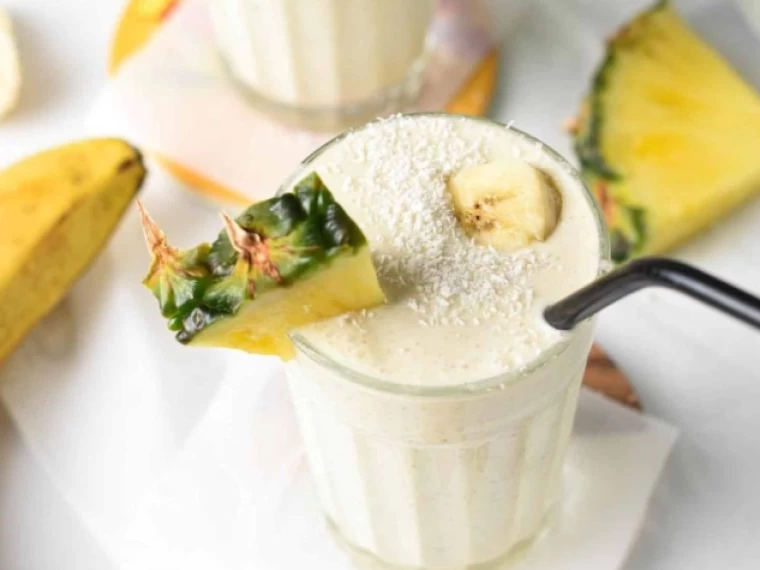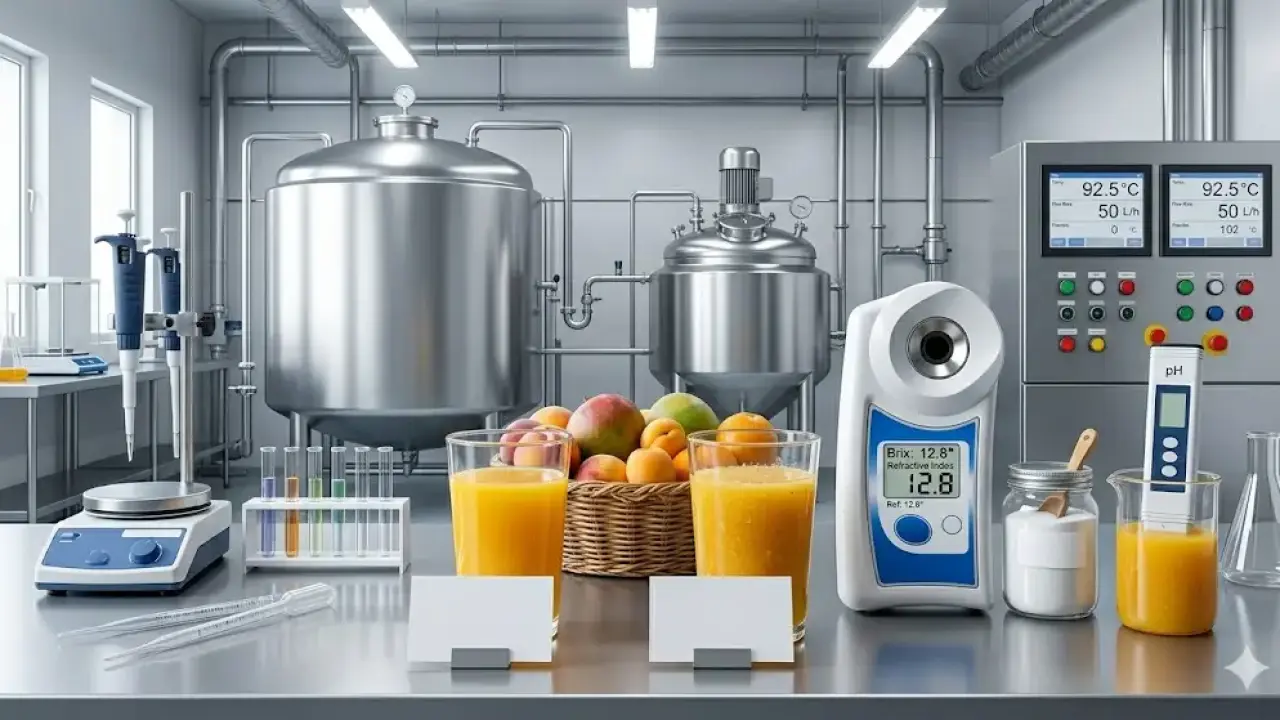
The difference between smoothies and fruit juice lies in the preservation of the fruit’s physical integrity. A smoothie is produced by blending the whole fruit, including its flesh and fiber, whereas juice consists only of the liquid extract, with the fiber removed. Fruit puree, on the other hand, has a thick, paste-like consistency and serves as the primary base for industrial nectars and smoothies. Nectar is a more diluted mixture of puree combined with water and sweeteners.
Choosing between these three products depends on your goal. If you are looking for rapid energy absorption, clear juice is suitable. However, if blood sugar control and satiety are important, smoothies—due to their full fiber content—are clearly superior. Puree and nectar fall between these two extremes, offering a balance of flavor and texture. Below, we analyze these structural differences from both scientific and industrial perspectives.
What Is the Structural Difference Between Smoothies and Juice?
The key difference is the presence of dietary fiber. In juice production, fruit is pressed to extract liquid, and the fibrous pulp is discarded. In contrast, smoothies are made by blending the entire fruit (sometimes including the peel) into microscopic particles. This means that in a smoothie, you consume all the fruit’s cellulose and hemicellulose.
This structural difference gives smoothies a much higher viscosity (thickness). The presence of fiber not only aids digestion but also allows nutrients to be released gradually.
Why Does Blending Create Different Nutritional Value Compared to Pressing?
The blending process breaks down the fruit’s cell walls but does not remove them. This allows antioxidants bound to fiber—typically lost in pressing—to remain available for absorption.
However, high-speed blending can introduce air and initiate oxidation, which is why smoothies are best consumed immediately after preparation.
What Role Does Fruit Puree Play in Industrial Products?
Fruit puree is produced by passing fruit through fine sieves, removing seeds and skin while retaining the fleshy structure in a thick, uniform form. Puree is essentially the “core” of many industrial fruit products.
In nectar production, puree is diluted with water and sugar. In industrial smoothies, different fruit purees are blended to create a dense and rich texture.
Due to its thickness, puree has a longer shelf life than homemade smoothies and is typically preserved using mild pasteurization. Many commercial nectars are based on purees of fleshy fruits such as peach or apricot.
Glycemic Index Comparison: Smoothie vs. Juice
One of the most important differences lies in the glycemic index (GI). Clear juice, lacking fiber, delivers sugars (mainly fructose) rapidly into the bloodstream, leading to a sudden insulin spike.
In contrast, the fiber in smoothies acts as a physical barrier, significantly slowing sugar absorption. This results in a more gradual increase in blood glucose levels, making smoothies a safer option for individuals concerned about blood sugar fluctuations.
How Does Fiber Prevent Energy Crashes?
The structural fibers in smoothies ensure that blood sugar rises and falls gradually rather than sharply. This stability prevents the sudden fatigue and hunger (energy crash) often experienced about an hour after consuming sugary juices or industrial nectars.
Vitamin Retention: Homemade Smoothie vs. Industrial Nectar
In a controlled experiment, vitamin C levels were measured in two samples:
- Homemade strawberry smoothie (prepared with a blender)
- Industrial strawberry nectar (made from puree and concentrate)
Findings:
- Immediately after preparation: the homemade smoothie contained 20% more vitamin C
- After 6 hours (refrigerated): the smoothie lost about 15% of its vitamin C due to oxidation
- Industrial nectar: thanks to modified atmosphere packaging, vitamin levels remained stable for up to 3 months, although at a lower level than fresh smoothie
Why Do Smoothies and Nectar Differ in Viscosity?
Viscosity, or resistance to flow, in smoothies is due to the fiber network and suspended fruit particles. In nectar, viscosity is lower and controlled by adjusting Brix levels and sometimes adding natural stabilizers such as pectin.
Smoothies have a more “food-like” consistency, while nectar remains a drinkable liquid. The main difference lies in the amount of added water: nectar typically contains 50% to 70% water, whereas pure smoothies contain no added water.
How to Read Labels to Identify Real Fruit Puree
To assess product quality, always check the ingredient list. In authentic smoothies or nectars, “fruit puree” or “natural juice” should be listed as the first or second ingredient.
If you encounter terms like “nature-identical flavor” or “food coloring,” the product does not offer the nutritional value of a real smoothie. Also, pay attention to added sugar (such as sucrose). Authentic smoothies should not contain added sugar—their sweetness should come solely from fruit.
Which Is Better for Weight Loss: Smoothie or Nectar?
Smoothies (provided they contain no added sugar) are clearly more suitable for weight loss. The main reasons are calorie density and satiety index. The fiber in smoothies helps you feel full for longer.
Nectars, due to added sugar and lack of fiber, contain more “empty calories” that are more likely to be stored as fat. However, portion control is still important—one glass of smoothie may contain multiple whole fruits and therefore a high total calorie load.
Conclusion
Understanding the differences between smoothies, juice, puree, and nectar allows you to make informed choices based on your lifestyle. Smoothies, by preserving the full fiber and structure of the fruit, serve as a nutritious and filling option.
Nectar and puree also offer enjoyable ways to consume fruit in beverage form, balancing taste and texture. As a general rule, the closer a product is to the natural state of fruit (more fiber, less processing), the greater its long-term health benefits.
FAQ: Smoothie, Puree, and Nectar
Is a smoothie the same as juice?
No. A smoothie contains the whole fruit (including fiber), while juice is only the liquid extract.
Why is nectar thinner than a smoothie?
Because nectar is made by diluting fruit puree with water and sweeteners, while smoothies typically contain no added water.
Is fruit puree similar to fruit leather in liquid form?
Fruit puree is mashed and filtered fruit; when dried, it becomes fruit leather, but in liquid form it serves as the base for nectar.
Which contains more fiber?
Smoothies contain the most fiber, followed by puree, and then nectar.
Do smoothies cause weight gain?
If consumed in large quantities, they can contribute to weight gain due to the high calorie content of multiple fruits.
Do nectars contain real fruit?
Yes. According to standards, nectar must contain 25% to 50% real fruit juice or puree.
What is the difference between industrial and homemade smoothies?
Homemade smoothies are fresher, while industrial ones undergo pasteurization and have a longer shelf life.
Can a smoothie replace a meal?
Yes. Due to its fiber and nutrient content, a smoothie can serve as a good breakfast or snack.
Why are smoothies more expensive than nectar?
Because smoothies contain 100% fruit content, while nectar is diluted with water.
Does adding yogurt turn a smoothie into puree?
No. Adding dairy creates a “protein smoothie” but does not change its fibrous nature.