What you’ll Read in This Article:
In this article, we comprehensively examine the properties of sumac, this traditional and beneficial Iranian spice. We explain the most important health effects of sumac, including its role in blood sugar control and diabetes, as well as its impact on weight management. In addition, we discuss different methods of consuming sumac-especially as sumac tea and its effects on conditions such as fatty liver, along with its benefits for skin. Finally, we look at safety notes and possible side effects so you can use this natural ingredient in the best way.
What Is Sumac? An Ancient Spice with Strong Antioxidant Properties
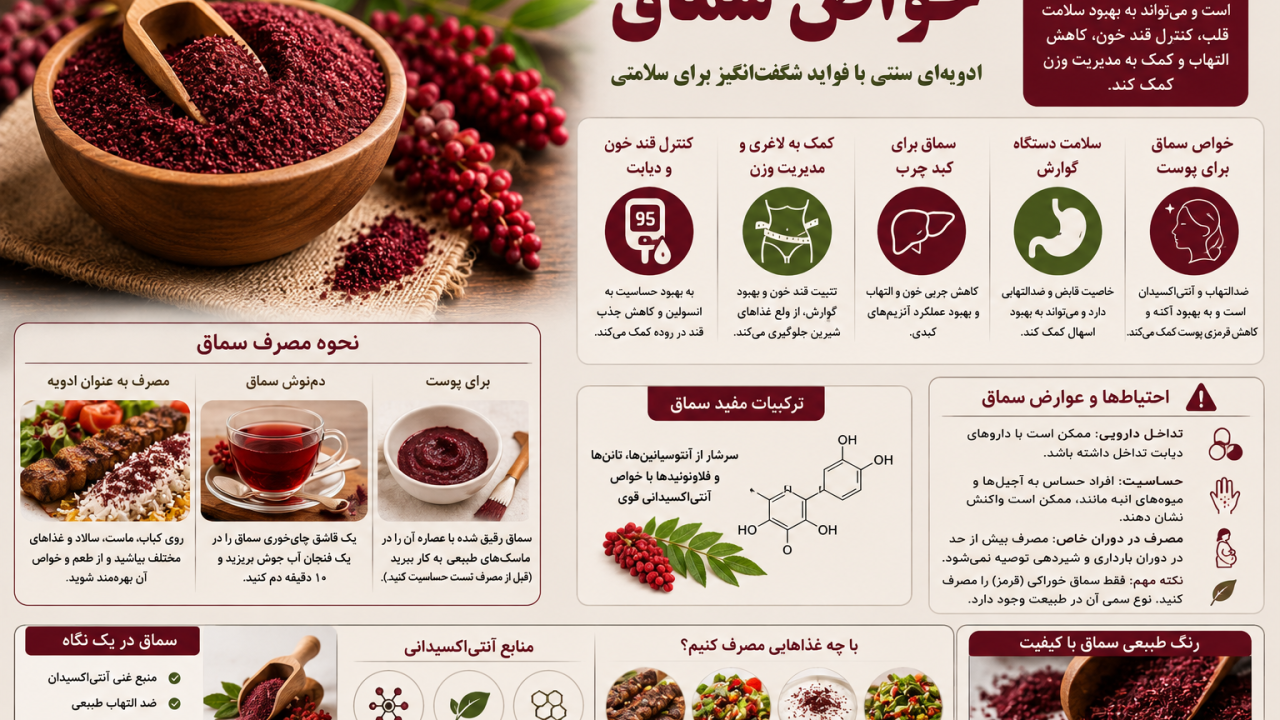
Sumac is the powder made from the dried fruit of the shrub of the same name. Its sour and astringent taste has long been an inseparable part of Iranian cuisine, especially alongside kebabs. The secret of sumac’s healing power lies in its very high content of antioxidant compounds such as anthocyanins and tannins. These compounds play a key role in fighting free radicals and reducing inflammation in the body.
Key Therapeutic Benefits of Sumac for Health
Thanks to its active compounds, sumac has direct effects on improving metabolic markers and controlling chronic diseases.
Sumac for Blood Sugar and Diabetes
One of the most important properties of sumac, confirmed by recent studies, is its ability to regulate blood sugar. Due to its high tannin and flavonoid content, sumac can improve insulin sensitivity and reduce sugar absorption in the intestines. These effects make sumac highly valuable for blood sugar and diabetes management, and its consumption (under medical supervision) may be beneficial for diabetic people.
Sumac for Weight Loss and Weight Management
Although sumac is not a direct fat burner, it plays an indirect role in weight management. Its benefits for weight loss work through two main mechanisms:
- Helping stabilize blood sugar, which prevents strong cravings for sweets.
- Improving digestion and providing anti-inflammatory effects, which support overall metabolic health and accelerate natural body processes.
Sumac for Fatty Liver and Digestive Health
Because of its ability to reduce inflammation and oxidative stress, sumac may benefit liver health. Preliminary studies suggest that sumac may help with non-alcoholic fatty liver disease by lowering blood lipid levels and improving liver enzyme function. In addition, sumac is an astringent that can help relieve diarrhea and certain digestive problems.
Practical Ways to Consume Sumac
To maximize the benefits of sumac, it is important to know how to use it.
As a Spice in Food
The most common method is sprinkling sumac powder on foods such as kebabs, minced meat dishes, and yogurt. Sumac not only adds a delicious flavor but also enhances the anti-inflammatory and antioxidant properties of meals.
Sumac Tea (Infusion)
One of the most effective ways to absorb its active compounds is to prepare sumac tea. Add one teaspoon of sumac to a cup of boiling water and let it steep for 10 minutes. This tea is especially useful for controlling blood sugar and soothing inflammation.
Sumac for Skin and Topical Use
Thanks to its anti-inflammatory and antioxidant properties, sumac can also benefit the skin. Using diluted sumac powder or its extract in natural masks may help improve acne and reduce redness. However, caution is needed, as sumac powder may cause skin irritation in sensitive people.
Precautions and Side Effects of Sumac
Although sumac is safe in moderation, attention to the following points is essential:
- Drug interactions: Because sumac lowers blood sugar, it may interact with diabetes medications. Diabetic patients should consult their doctor before changing their sumac intake.
- Allergies: People allergic to nuts or mango-like fruits may also react to sumac. It is also important to avoid toxic varieties of sumac found in nature-only edible sumac should be purchased.
- Special conditions: Excessive consumption of sumac during pregnancy and breastfeeding is not recommended.
Conclusion: Sumac, More Than Just a Seasoning
Sumac is a powerful spice, far beyond a simple garnish for kebabs. Its properties in controlling blood sugar, aiding weight management, improving liver function, and reducing inflammation make it a valuable addition to the diet. With smart use and awareness of consumption methods and possible side effects, you can enjoy all the benefits of this natural remedy.
Frequently Asked Questions (FAQ)
- What is the best time to consume sumac for weight loss?
To aid weight loss and appetite control, it is recommended to consume sumac with main meals, especially those containing rice and carbohydrates, to help regulate post-meal blood sugar levels.
- Can sumac really treat fatty liver?
Sumac is a supportive dietary supplement. Studies show positive effects in reducing blood lipids and inflammation, which benefit liver health. However, treating fatty liver requires a proper diet and physical activity under medical supervision.
- Is there a difference between red and brown sumac?
Sumac is usually dark red. Brown or dark purple varieties may result from mixing with other substances or specific processing methods. Always buy high-quality sumac with a natural color.
- Does sumac tea have side effects?
Moderate consumption (1–2 cups daily) is safe for most people. However, excessive or concentrated intake may cause nausea or constipation, especially in those with sensitive digestive systems.