What you’ll Read in This Article
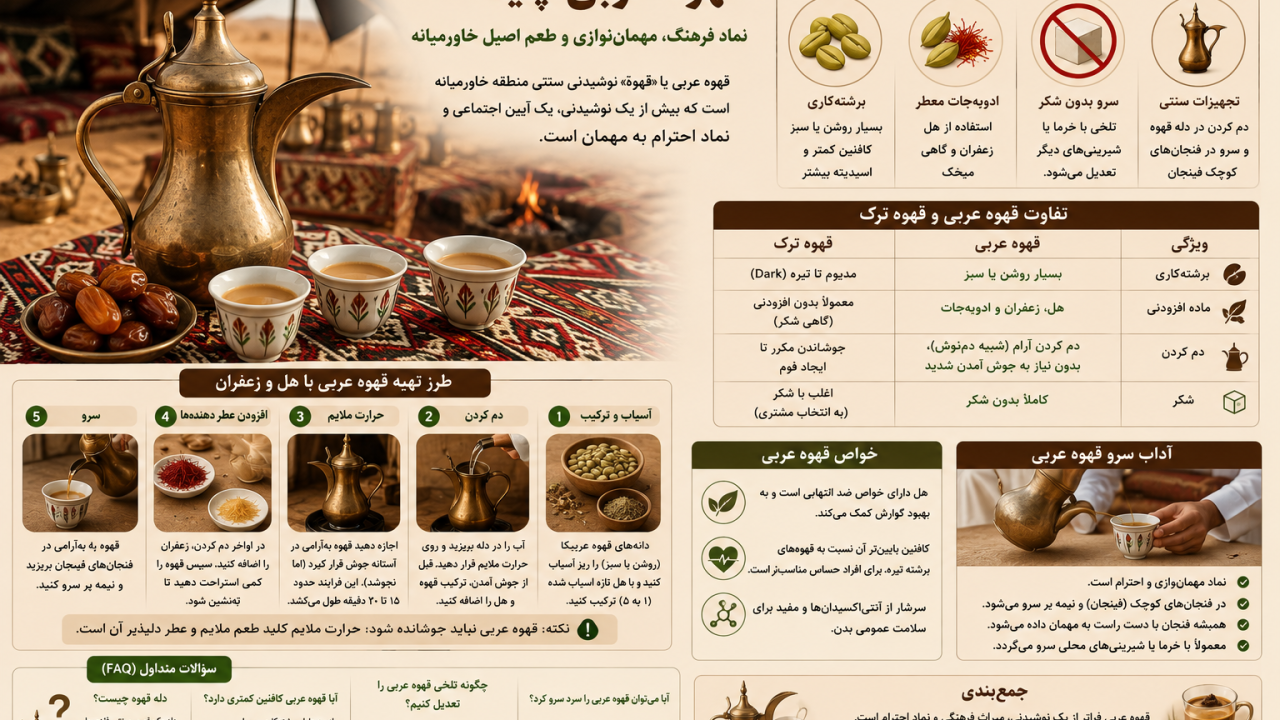
In this article, we answer the question what is Arabic coffee? And introduce this traditional drink, a symbol of Middle Eastern culture and hospitality. We explain the differences between Arabic coffee and Turkish coffee, highlight its unique features such as the use of cardamom and saffron and the absence of sugar, and teach how to prepare Arabic coffee without boiling, using the traditional deleh. Finally, we look at the health benefits and serving etiquette of Arabic coffee.
Arabic Coffee: Rooted in Bedouin Hospitality
Arabic coffee, called “qahwa” or “gahwa” in Arabic, is a type of coffee specific to the Middle East and Persian Gulf countries. It is more of a social ritual and symbol of respect for guests than simply a source of caffeine. Arabic coffee is usually made from Arabica beans roasted very lightly or sometimes left almost green.
Key Features of Arabic Coffee
- Light roast: Beans are roasted very lightly, sometimes appearing green. This results in lower caffeine and higher acidity.
- Aromatic spices: The defining feature is the addition of large amounts of cardamom during brewing. Saffron and cloves may also be added for aroma and flavor.
- Served without sugar: Traditionally, Arabic coffee is served unsweetened. Its bitterness or acidity is balanced with dates or other sweets.
- Traditional equipment: Brewing is done in a deleh (a traditional metal pot with a long spout), and serving is in small handle less cups called finjan.
Differences between Arabic Coffee and Turkish Coffee
|
Feature |
Arabic Coffee |
Turkish Coffee |
|
Roast Level |
Very light or green |
Medium to dark |
|
Additives |
Cardamom, saffron, spices |
Usually none (sometimes sugar) |
|
Brewing Method |
Gentle steeping, like herbal tea, not boiled |
Repeated boiling until foam forms |
|
Sugar |
Always unsweetened |
Often sweetened, depending on preference |
How to Prepare Arabic Coffee with Cardamom and Saffron
Brewing Arabic coffee without boiling is essential; unlike Turkish coffee, it should not be boiled to avoid excessive bitterness.
- Grind and mix: Grind lightly roasted or green Arabica beans finely. Mix with freshly ground cardamom (ratio about 1 part cardamom to 5 parts coffee).
- Brewing: Heat water in a deleh or suitable pot over low heat. Before boiling, add the coffee-cardamom mixture.
- Gentle heating: Let the coffee steep gently near boiling point (but not boiling). This process takes 15–20 minutes.
- Add flavorings: If desired, add saffron near the end of brewing. Allow the coffee to rest briefly so grounds settle.
Benefits and Serving Etiquette of Arabic Coffee
The distinctive qualities of Arabic coffee are mainly attributed to the cardamom and the light roast level.
- Health benefits: Cardamom has anti-inflammatory properties and aids digestion. The lower caffeine content makes Arabic coffee suitable for those sensitive to caffeine.
- Serving etiquette: Arabic coffee symbolizes hospitality. It is served in small cups, filled halfway. The cup is always offered with the right hand.
Conclusion: Arabic Coffee as Cultural Heritage
Arabic coffee is more than a drink, it is a cultural symbol of respect and tradition. By understanding the differences between Arabic and Turkish coffee, learning the proper brewing method with cardamom and saffron, and following traditional serving etiquette, you can experience this rich heritage at home. Unsweetened Arabic coffee is an ideal choice for enjoying the natural flavors of spices.
Frequently Asked Questions (FAQ)
- What is a deleh and can Arabic coffee be made without it?
A deleh is a traditional metal pot with a long handle and narrow spout for pouring coffee. Yes, Arabic coffee can be made in a regular pot, but the deleh is part of the cultural ritual.
- Does Arabic coffee cause less heart palpitations?
Yes. Because the beans are roasted very lightly or left green, caffeine content is lower than in dark roasts, reducing the likelihood of palpitations.
- How can the bitterness of unsweetened Arabic coffee be balanced?
Traditionally, Arabic coffee is served with dates or local sweets. Dates balance the bitterness and create a complete flavor pairing.