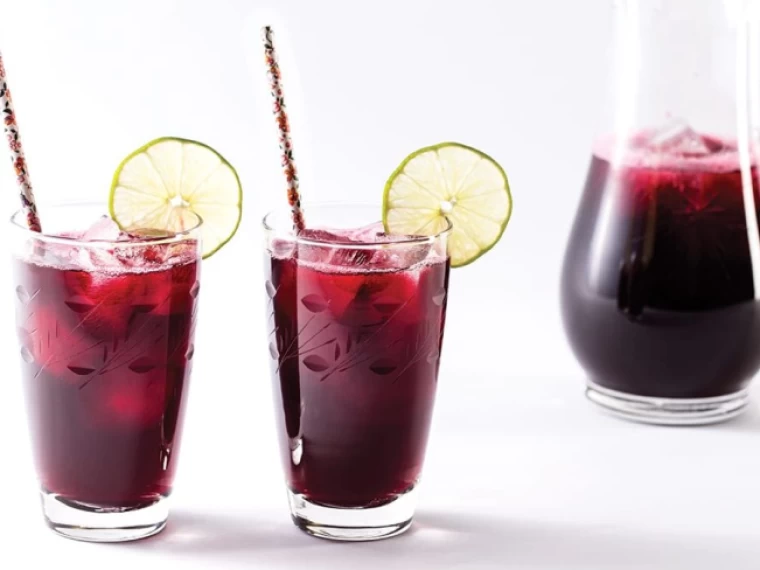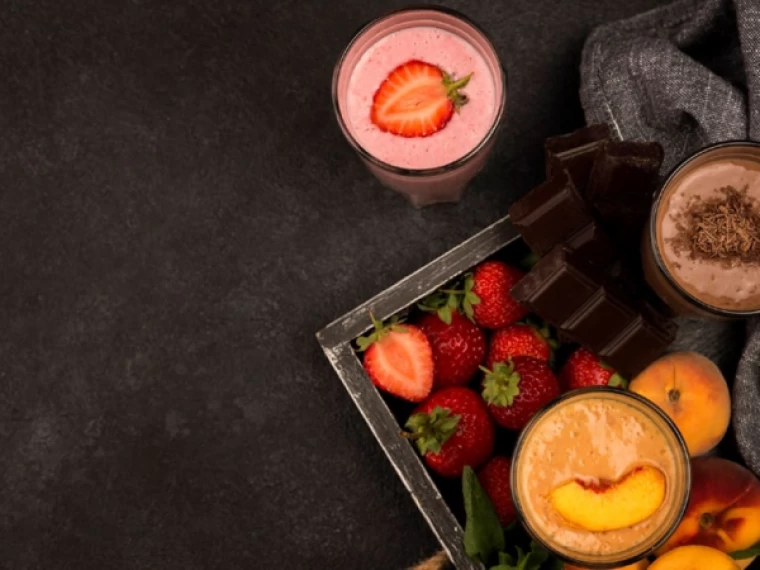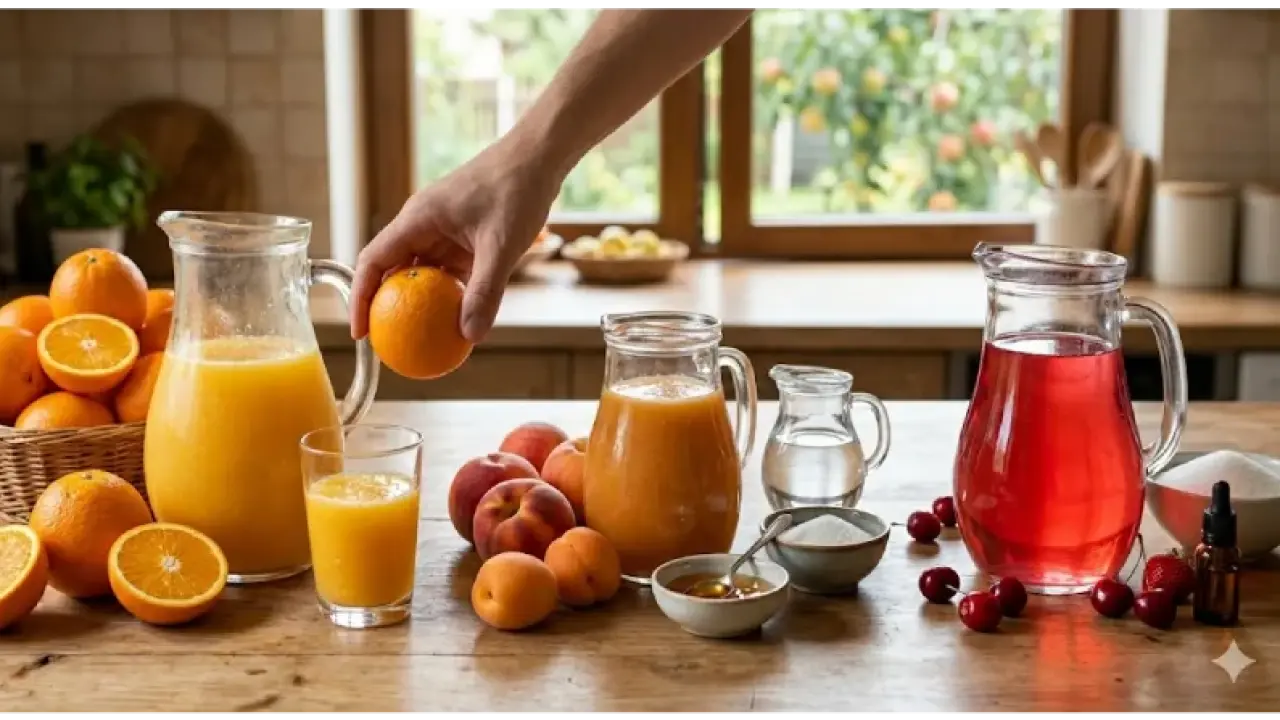
The primary difference between 100% natural juice, nectar, and fruit drink lies in their pure fruit content and added ingredients. Natural juice contains 100% fruit extract with no additives, whereas nectar contains between 25% and 50% fruit and includes added water, sugar, and acids. Fruit drinks, with lower fruit content (approximately 5% to 20%), represent the lowest category in terms of nutritional value.
Understanding these differences helps consumers make the best choice based on their nutritional needs. Pure juice contains the highest levels of vitamins and fiber, nectar offers a sweeter taste and thicker texture, and fruit drinks are mainly produced for flavor enjoyment at a lower cost. All these products are categorized under national standards to ensure transparency in their composition.
What Is the Main Difference Between 100% Natural Juice, Nectar, and Fruit Drink?
The fundamental difference between these three products lies in their “purity.” 100% natural juice is obtained directly from pressing fruit or by reconstituting fruit concentrate with a specific amount of water to match the original fruit composition. In this product, no sugar, color, or artificial flavor is permitted.
In contrast, nectar is a combination of fruit extract, water, and sweeteners. The reason for producing nectar is that some fruits, such as peach, apricot, or mango, are naturally very thick (puree-like) in their 100% form and difficult to drink. Therefore, they are balanced by adding water and sugar. Fruit drink, however, is a more commercial product containing only a small percentage of fruit, with the majority consisting of water, sugar, citric acid, and flavorings.
Is the Fruit Content Different in Nectar and Juice?
Yes, fruit percentage is the key differentiating factor. According to food industry standards, juice must contain 100% fruit extract. However, in nectar, the percentage varies depending on the fruit type; for example, citrus nectar must contain at least 50% fruit, while thicker fruit nectars may contain around 25%.
In fruit drinks, this percentage drops significantly and typically ranges between 5% and 20%. In these products, ingredients such as pectin are used to maintain consistency and create a mouthfeel similar to natural juice. Consumers should note that the lower the fruit content, the lower the levels of vitamins and minerals.
What Is the Role of Fruit Concentrate in Nectar Production?
Fruit concentrate is essentially juice from which a large portion of water has been removed through evaporation to facilitate transportation and storage. In nectar production, this concentrate is reconstituted with water and sugar. A key point is that during concentrate production, some heat-sensitive vitamins are lost; therefore, nectars generally rank lower in biological value compared to juices obtained directly from fruit (NFC).
Which Additives Are Permitted in Nectar and Fruit Drinks?
Permitted additives include natural sweeteners (such as sugar or glucose), organic acids for pH adjustment, and sometimes synthetic vitamins for fortification. In fruit drinks, the use of nature-identical flavorings and food colorants is also common to maintain product appeal.
One of the most important components is citric acid, which is added to adjust acidity and extend shelf life. In 100% natural juice, the addition of any sugar or external acid is not allowed, and sweetness comes solely from natural fruit sugars (fructose). This makes the glycemic index of natural juice more manageable compared to nectar containing added sugar.
Are Citric Acid and Sweeteners Harmful to Health?
When used within limits defined by food safety authorities, these substances are not harmful. However, excessive consumption may lead to tooth decay or increased caloric intake. Added sweeteners in nectar and fruit drinks are the primary reason for their higher calorie content compared to natural juice.
How Can We Distinguish Nectar from Juice Based on Packaging?
The quickest way is to check the product name on the front label and the ingredient list on the back. Manufacturers are required to clearly state “100% Juice,” “Nectar,” or “Fruit Drink.” Additionally, if “Added Sugars” are listed in the nutritional table, the product is not natural juice.
Another indicator is the health license number and standard certification mark. In high-quality products, the concentration measured in Brix may also be indicated. Higher Brix values (within standard ranges) reflect higher levels of soluble solids in the fruit.
Comparative Test of Shelf Life and Consistency
In a controlled laboratory experiment, three samples (natural orange juice, orange nectar, and orange fruit drink) were evaluated for oxidation rate and sedimentation.
Observations:
- Natural juice: After 4 hours of exposure to air, rapid browning occurred due to enzymatic activity and absence of preservatives. Fiber sedimentation at the bottom was clearly visible.
- Nectar: Showed greater color stability and maintained a more uniform texture due to stabilizers.
- Fruit drink: Showed no color change (due to citric acid and artificial color) and remained completely clear without sediment.
This experiment demonstrated that long-term visual stability does not necessarily indicate quality, but rather the presence of additives that inhibit natural degradation processes.
Why Is Natural Juice More Expensive Than Nectar and Fruit Drinks?
The primary reason is raw material cost. Producing one liter of 100% natural juice requires approximately 1.5 to 3 kilograms of fresh fruit, depending on the type. In nectar and fruit drinks, a significant portion of the volume consists of water and sugar, which are much less expensive.
Additionally, production processes such as precise pasteurization and filtration-used to preserve natural flavor without artificial additives-require more advanced and costly technology. Therefore, a low price for a product labeled as “juice” should raise doubts about its 100% purity.
Conclusion
Choosing between 100% natural juice, nectar, and fruit drink ultimately depends on balancing budget, taste preferences, and health priorities. If maximum nutritional value is the goal, natural juice is unmatched. Nectar offers a more economical option with a pleasant taste, while fruit drinks are primarily intended for refreshment and affordability. Always read product labels carefully before purchasing to understand exactly how much real fruit you are consuming.
FAQ – Frequently Asked Questions about Juice Types
- Is nectar simply diluted juice?
No. In addition to water, nectar contains sugar and acidity regulators to maintain flavor balance. - Which option is healthier for children?
100% natural juice is the best option due to the absence of added sugar and preservatives. - Are preservatives added to 100% natural juice?
No. According to standards, natural juice must not contain preservatives; shelf life is ensured through pasteurization. - What is the calorie difference between nectar and juice?
Nectar typically has higher calories due to added sugar. - Why do nectars appear thicker than natural juices?
They are often made from pulpy fruits (such as mango) or include stabilizers like pectin. - Are carbonated fruit beverages considered nectar?
No. Carbonated beverages fall under fruit drinks and usually contain very low fruit content. - What does Brix mean?
It is a unit for measuring soluble solids (mainly sugars) in juice, indicating concentration. - Are sugar-free juices truly natural?
If labeled “100% natural,” the sugar is only from fruit; otherwise, artificial sweeteners may be used. - What is the difference between “from concentrate” and “not from concentrate” juice?
NFC juice is packaged directly, while concentrate-based juice is evaporated and later reconstituted. - Does nectar cause weight gain?
Due to added sugar (sucrose), excessive consumption of nectar has a higher potential for weight gain compared to natural juice.