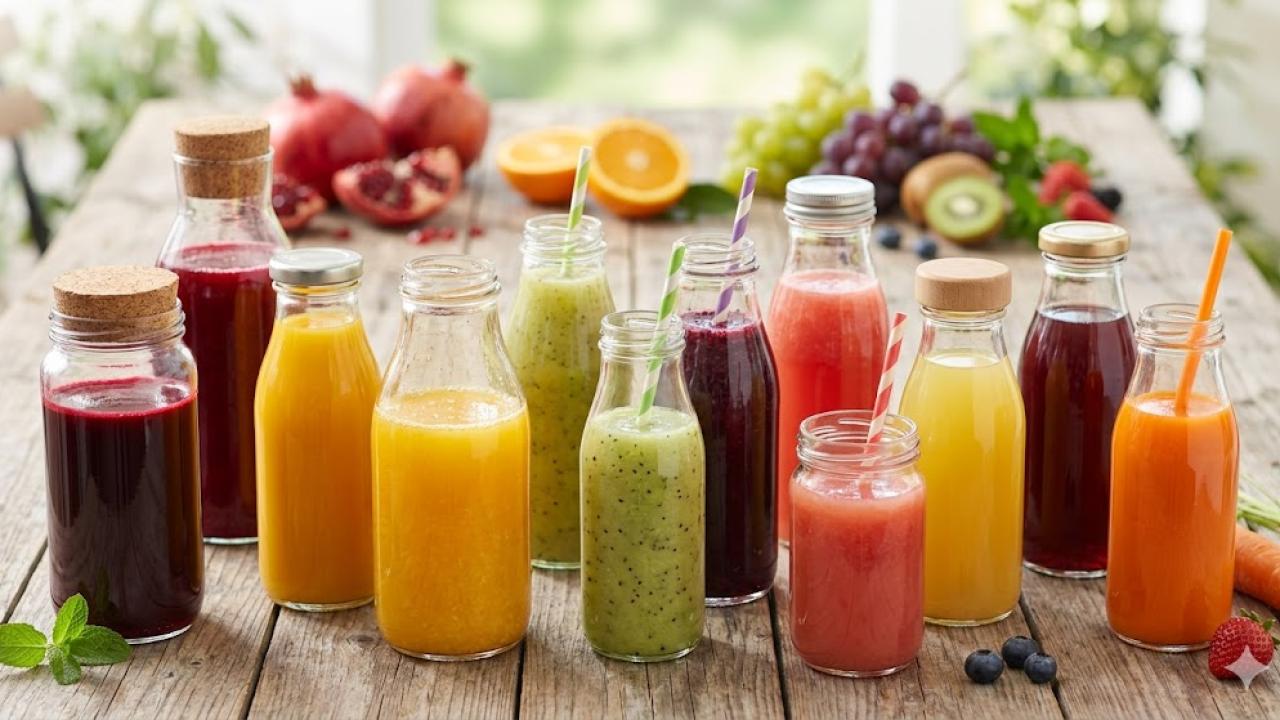
The fruit percentage in a juice indicates the weight ratio of juice, puree, or fruit extract relative to the total volume of the final product. This figure is defined according to national standards. For example, 100% fruit juice must contain no additives, nectars typically contain between 25% and 50% fruit, and fruit drinks are usually produced with less than 20% fruit content.
Understanding these numbers allows you to distinguish between a nutritious product and what is essentially “flavored sugar water.” The percentage stated on the packaging is directly related to vitamin content, antioxidants, and, of course, the product’s price. In this article, we explore professional methods for decoding commercial labels so you can make informed purchasing decisions.
What Does Fruit Percentage Really Mean in Juices and Industrial Beverages?
Fruit percentage reflects the amount of soluble solids and extract derived directly from fruit. When a label states “100% natural,” it means that all the liquid inside the package comes either from freshly pressed fruit or from reconstituted fruit concentrate with precisely the amount of water that was previously removed during evaporation.
In beverages with lower fruit content, the remaining volume is typically filled with water, sugar, citric acid, and sometimes stabilizers. Importantly, this percentage is calculated based on weight. Manufacturers are required to adhere to formulations approved by food and drug authorities, ensuring a specific amount of fruit extract per unit of product.
How to Read the Nutrition Label and Ingredient List
To accurately determine fruit content, examine the Ingredients section on the back of the packaging. According to labeling regulations, ingredients must be listed in descending order by weight. This means the first listed ingredient has the highest proportion in the product.
If “water” or “sugar” appears before “fruit concentrate” or “puree,” the product likely has a low fruit percentage.
The nutrition facts table also provides useful clues. Fiber and potassium levels can indicate product purity, as these nutrients are minimal in low-fruit beverages. Additionally, official health certifications and traceability codes can help verify the authenticity of the stated fruit percentage.
What Does Ingredient Order Reveal?
Ingredient order is a golden rule in label interpretation. In high-quality nectars, the fruit component (e.g., mango puree) typically appears second after water. In lower-quality fruit drinks, fruit may appear fourth or fifth—after sugar, citric acid, and flavorings—clearly indicating a heavily processed product with limited nutritional value.
Legal Standards for Minimum Fruit Content
According to regulatory standards, each category of beverage must meet a minimum fruit content to be eligible for sale. These standards are designed to prevent market fraud.
For example:
- Orange nectar must contain at least 50% fruit
- Sour cherry nectar must contain at least 25% fruit (due to high acidity requiring dilution)
In carbonated or still fruit drinks, fruit content can drop significantly, typically ranging from 5% to 20%. Products below these thresholds are not permitted to use misleading fruit imagery on packaging, although this rule is not always strictly followed.
Fruit Percentage in Clear Juices vs. Puree-Based Products
In clear juices (such as apple juice), fruit percentage is calculated based on Brix value—a measure of soluble solids. In puree-based products (like peach nectar), the entire fruit matrix, including soluble fiber, is included in weight calculations.
This is why puree-based nectars often feel more “fruit-like,” even when their labeled percentage matches that of a clear juice.
Does Higher Fruit Percentage Mean Less Sugar?
This is a common misconception. A 100% fruit juice may actually contain more sugar than a beverage with only 5% fruit. The key difference lies in the type of sugar.
- In 100% juice: sugars are naturally occurring (mainly fructose)
- In low-percentage drinks: most sugars are added (e.g., sucrose or glucose syrup)
While natural sugars come with micronutrients, higher fruit content can still result in a higher glycemic load—important for individuals with diabetes. Nevertheless, from a nutritional standpoint, higher fruit content is generally preferable due to its vitamins, potassium, and antioxidants.
The Role of Brix in Verifying Fruit Content
Brix is a unit used to measure the concentration of soluble solids in juice. Quality inspectors measure the Brix level of the final product and compare it with standard values for that fruit to verify label accuracy.
If the Brix value is lower than expected, it suggests excessive dilution. In industrial production, achieving a specific fruit percentage (e.g., 50% nectar) requires precise blending of concentrate and water to reach an approved Brix level. This value varies by fruit—for instance, natural orange juice typically has a Brix of 10–12.
Conclusion
Reading product labels is a skill that directly impacts your health. Fruit percentage is the most important indicator to consider—often even more than price. By choosing products with higher fruit content and shorter ingredient lists (free from added sugars and artificial flavors), you not only enjoy a more authentic taste but also benefit from essential nutrients.
Always trust the ingredient list on the back of the package—not the appealing images on the front.
FAQ: Fruit Percentage and Labeling
Does fruit percentage include flavorings?
No. Fruit percentage only accounts for real juice or puree; flavorings are considered separate additives.
Why do some nectars contain only 25% fruit?
Fruits like lemon or sour cherry are highly acidic and not palatable at higher concentrations.
Does “vitamin-enriched” mean high fruit content?
Not necessarily. Synthetic vitamins are sometimes added to low-fruit beverages to compensate for poor nutritional value.
How can I identify added sugar?
Look for terms like sucrose, glucose syrup, or corn syrup in the ingredient list.
Are 100% juices in aseptic cartons truly natural?
Yes. Such packaging preserves juice without the need for preservatives.
What’s the difference between “not-from-concentrate” and “from concentrate”?
Both can be 100%, but in the latter, water is removed and later re-added.
Why do products with the same fruit percentage have different prices?
Factors include fruit quality, packaging type, and production methods (e.g., cold pressing).
Are low-fruit beverages suitable for children?
It’s better to offer children 100% juice or low-sugar nectars to avoid developing a preference for overly sweet drinks.
What is the role of pectin in low-fruit beverages?
Pectin is added to improve texture and mimic the mouthfeel of real juice.
Does color indicate fruit content?
No. Many low-fruit beverages contain added colorants to appear more visually appealing than natural products.